Myofunctional Therapy and Orthodontics
Myofunctional Therapy and Orthodontics in Thousand Oaks
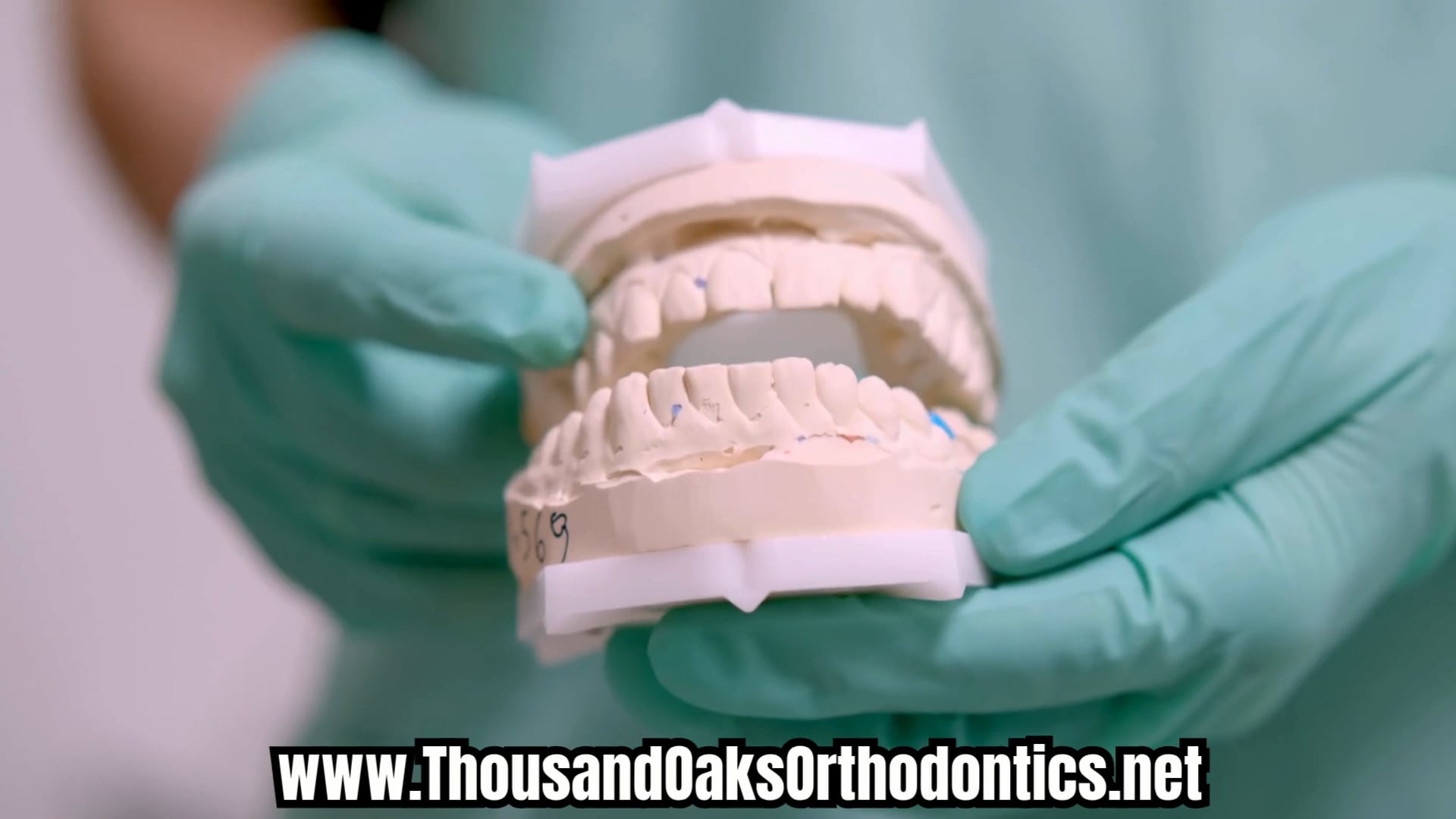
Self-Ligating Braces | Thousand Oaks | Dr. Thomas C. Lee, DDS, MS
Straight teeth are one part of a good orthodontic result. Strong oral muscles are the other part. Myofunctional therapy is a set of simple exercises. They retrain how your tongue, lips, and cheeks work together. Paired with braces or aligners, the therapy helps your teeth stay straight. It can also improve how you breathe and how well you sleep.
At our Thousand Oaks practice, Dr. Lee checks oral muscle function at every consult. When a patient needs more, he refers to a trained myofunctional therapist. This guide walks through how the two treatments work together. It also covers who needs therapy, what the research shows, and how it fits into airway-focused orthodontics.
What Is Myofunctional Therapy, and Why Do Orthodontists Recommend It?
Myofunctional therapy is also called orofacial myofunctional therapy, or OMT. It trains the soft tissues of the mouth, face, and neck. The exercises target four habits. The first is nasal breathing. The second is a closed lip seal at rest. The third is the tongue resting on the roof of the mouth. The fourth is a healthy swallow that does not push against the front teeth.
Orthodontists watch these habits because muscles move teeth. The tongue pushes forward about 1,000 times a day during swallows. Over time, that force can shift teeth out of place. Mouth breathing changes how the upper jaw grows. Weak lip muscles let teeth drift. Once those forces are fixed, orthodontic results last longer.
Most myofunctional therapists are speech-language pathologists, dental hygienists, or dentists with extra training. Sessions look more like physical therapy than dental work. Patients practice exercises at home each day. They meet with the therapist every few weeks to check progress.
This is why the field overlaps so closely with airway care. A narrow palate often goes hand in hand with mouth breathing. A low resting tongue often goes with a recessed lower jaw. Treating only the structure leaves the muscle pattern in place. That is one common reason teeth shift back after braces.
Who Needs Myofunctional Therapy? Common Signs in Kids and Adults
Many patients come in for crooked teeth and find out their mouth muscles are part of the problem. Some signs are easy to spot. Others get missed for years.
Common signs in kids:
- Mouth breathing during the day or while asleep
- Snoring or restless sleep
Tongue resting low or pushing forward when swallowing - Open bite, where the front teeth do not touch when biting
- Speech issues like a lisp
Trouble chewing, slow eating, or strong picky-eating habits - Tongue tie, or a tight band of tissue under the tongue
Long face shape, narrow upper jaw, or crowded teeth
Common signs in adults:
- Snoring, dry mouth in the morning, or pauses in breathing during sleep
- TMJ pain, jaw clenching, or tension headaches
- Tongue thrust that returned teeth to crowded after old orthodontic work
- A long history of mouth breathing or chronic congestion
- Orthodontic relapse despite wearing retainers
Kids and adults can both benefit. Children respond faster because their bones and muscles are still growing. The American Association of Orthodontists (AAO) recommends an orthodontic screening around age 7. That is also a good time to catch myofunctional issues. Many therapists start working with kids around age 4, once they can follow simple steps. For families weighing early orthodontic treatment or two-phase orthodontic treatment, an early myofunctional check is a smart first step.
They Trusted Us.
They're Still Smiling.

 Posted on Google
 Tracey
Trustindex verifies that the original source of the review is Google.
I highly recommend Dr. Lee. I went back for braces at age 57. He has an amazingly perfect eye. He and his staff are extremely professional.Posted on Google Raul ChrisGreat Friendly knowledgeable staff. Very happy with their work. Highly recommend.Posted on Google
 Henry ByunAppointments are on time or a little early which really helps with the logistics. I have multiple children getting Invisalign and everyone is having a very positive experience with continually good results. The staff are friendly, efficient and professional and take great care of each individual child. Dr. Lee is easy-going and gets great results (already have one adult child that “graduated” with flying colors). Thank you! My wife will be getting it done next year :-)Posted on Google
 Jaime CamposDr. Lee is an amazing orthodontist, very friendly and attentive to detail. The staff is also incredibly friendly and welcoming. Great experience overall. Highly recommend!Posted on Google
 Stephanie LebenThe office staff at Dr. Lee’s is top notch. We were greeted when we walked in, taken to our appointment in a timely fashion and dismissed with friendly good byes and will see you again soon. Dr. Lee is very attentive to detail and makes sure everyone is on the same page!Posted on Google
 Christy HoskingDr. Lee and his staff are so great! They treat you like family, and the level of service is next level. We highly recommend Thousand Oaks Orthodontics.Posted on Google
 Claudia HabisDr. Lee is the best, very professional and knowledgeable and the staff are amazing.Posted on Google
 Vivian GonzalezWe took our 9 year old to Thousand Oaks Orthodontics, and he got expanders on both the top and bottom. The staff was always very friendly, especially Abby, who made the visit easy and welcoming. Highly recommend this office for great care!Posted on Google
 Wendy SmithDr. Lee and his staff always make me feel welcome. They explain the Invisalign process clearly and in a way that’s easy to understand, while encouraging me to stay on track with my treatment. I’m so glad I chose this office for my Invisalign journey.Posted on Google
 Heather HartNo words just all praise. Staff is wonderful and Dr. Lee really knows his stuff. Knowdgeable trustworthy and experiende. A great combination. Helped my daughter and now me! 10 stars.Verified by TrustindexTrustindex verified badge is the Universal Symbol of Trust. Only the greatest companies can get the verified badge who has a review score above 4.5, based on customer reviews over the past 12 months. Read more
Does Myofunctional Therapy Actually Work? What the Research Shows
This is the most-asked question online, and the honest answer has two parts.
Where the evidence is strong:
- A 2010 study in the American Journal of Orthodontics and Dentofacial Orthopedics found that open-bite patients treated with both OMT and braces had only 0.5 mm of relapse. Patients treated with braces alone relapsed by 3.4 mm. That is a meaningful difference for long-term stability.
- A 2024 retrospective study in the Journal of Pharmacy and Bioallied Sciences followed 80 patients ages 8 to 18. The group that added OMT had a 25 percent better Peer Assessment Rating (PAR) score after treatment. They also reported much higher satisfaction, with 85 percent rating themselves very satisfied versus 60 percent in the orthodontics-only group.
- The Academy of Orofacial Myofunctional Therapy reports that the work is 80 to 90 percent effective at correcting swallowing patterns and resting tongue posture.
Where the evidence is still developing:
- OMT is a promising add-on for mild to moderate obstructive sleep apnea (OSA), but it is not a stand-alone cure. Sleep physicians usually combine it with CPAP, oral appliance therapy, or surgical options.
- More large randomized trials are needed to lock in the size of the benefit for some conditions.
The take-home is simple. When this care is added to orthodontic treatment for the right patient, the research shows better stability and better-looking results. Used alone for serious airway issues, it is one tool, not the whole plan.
How Long Does Treatment Take, and How Much Does It Cost?
Most programs run 6 to 12 months. Patients see early changes in the first 4 to 8 weeks. Bigger shifts take 3 to 6 months of daily practice. Steady nasal breathing and a stronger swallow are two examples.
A typical schedule looks like this:
- A first evaluation that runs 60 to 90 minutes
- Weekly or every-other-week sessions for the first 2 to 3 months
- Monthly check-ins after that
- 5 to 10 minutes of home exercises every day
Cost varies by therapist and by location. National averages run from $1,500 to $3,500 for a full program. Some therapists offer a self-paced online option for $500 to $700. Most medical and dental insurance plans do not cover the therapy directly. But Health Savings Accounts (HSAs) and Flexible Spending Accounts (FSAs) often do. Some patients get partial coverage by sending a superbill. That works best when a tongue tie release, sleep diagnosis, or speech issue is on file.
When therapy supports orthodontic care, the cost is often offset by what families save on relapse. A second round of braces costs more than a full course of muscle work. So does a refined set of Invisalign aligners.
Should I Get Self-Ligating Braces or Normal Braces?
This is one of the most common questions people ask online, and the honest answer is: the braces matter less than the orthodontist. A great orthodontist with traditional braces will get better results than an average one with the fanciest bracket system on the market.
That said, if you have a good orthodontist who offers both, the clip-based option does have real advantages in comfort and upkeep. If you hate the idea of rubber bands trapping food, if you want shorter appointments, or if you’re an adult who wants something a little more low-profile, going clip-based makes a lot of sense.
If your case is mild and you’d rather skip brackets altogether, clear aligners or Invisalign might be a better fit. For more complex cases with major bite corrections, clip-based braces tend to give the orthodontist more control. We cover the full range of options on our orthodontic treatments page.
The best move is to get a consultation, hear your options, and ask questions. A good orthodontist won’t push you toward one system. They’ll tell you what actually fits your teeth.
What Does the Process Look Like at Our Thousand Oaks Office?
Dr. Lee does not deliver myofunctional therapy directly. He works with trained therapists in Thousand Oaks, the Conejo Valley, and the rest of Ventura County. The orthodontic plan and the therapy plan run together. That way, the muscle work matches what the appliances are doing.
What you can expect at our practice:
- A full orthodontic and oral function exam at your first visit
- 3D scans and a clinical look at tongue posture, lip seal, and breathing pattern
- A referral to a vetted myofunctional therapist when one is the right call
- Coordination on timing, so therapy and appliances reinforce each other
- Communication with your pediatrician, ENT, or sleep physician when needed
For kids in early treatment, this work often pairs with dentofacial orthopedics and palatal expansion. The expansion creates space for the tongue. The therapy teaches the tongue to use that space. For teens and adults, therapy supports clear aligner and braces cases. It lowers the chance that tongue thrust or mouth breathing pulls teeth back over time.
If you have a child who mouth breathes, the cause may be a muscle, not a tooth. The same goes for adults who snore. The same goes for anyone whose old retainers stopped fitting. Schedule a consultation with our Thousand Oaks office, and we will look at the full picture.
No Hidden Fees
Transparent plans with no surprise charges.
Instant Approval
Eligibility check with minimal documentation.
Smile with Confidence
In-house Financing
Zero Interest
No Credit Check
Free Consultation
Start Your Smile Journey Today
Book your complimentary consultation and discover why Thousand Oaks families trust us for lasting results.