What Are Self-Ligating Braces? How They Work and Why They're Different
What Are Self-Ligating Braces? How They Work and Why They're Different
Self-Ligating Braces | Thousand Oaks | Dr. Thomas C. Lee, DDS, MS
If you’ve been looking into braces, you may have seen the term “self-ligating braces” and wondered what makes them different. It’s a fair question. Most of us grew up seeing the same metal brackets and colorful rubber bands. But these braces work in a totally different way. They change how the wire connects to the bracket, and that one change affects your comfort, how often you visit the office, and how your teeth move.
Let’s break it all down.
How Self-Ligating Braces Actually Work
With normal braces, small rubber bands or thin metal ties hold the wire against each bracket. Those bands create friction, which helps your teeth move. But they also stretch out between visits, collect plaque, and sometimes pop off at the worst time.
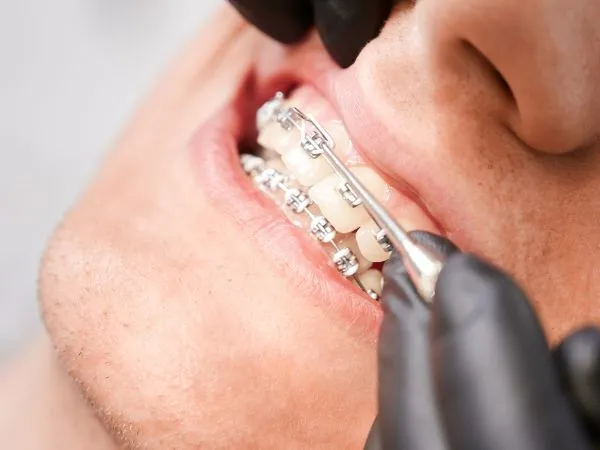
Self-ligating braces skip the rubber bands. Instead, each bracket has a tiny built-in clip that holds the wire in place. Think of it like a small gate that opens and closes over the wire. This lets the wire slide freely through the brackets and changes how the force hits your teeth.
A study in the American Journal of Orthodontics found that passive clip-based brackets reduce friction by up to 50 to 70 percent compared to brackets with rubber bands. That’s a big deal. Less friction means less pressure on your teeth and smoother, steadier movement.
The Best Self-Ligating Braces: What Sets the Top Systems Apart
Not all self-ligating brackets are the same. There are two main types:
- Active brackets use a spring clip that presses on the wire. This gives the orthodontist more control when closing gaps or making small changes.
- Passive brackets use a slide that holds the wire loosely. This is where you get the biggest drop in friction. Passive systems tend to feel gentler in the early months, when your teeth are moving the most.
Two of the most well-known systems are the Damon System and the Pitts 21 Pro. The Pitts 21 Pro was created by Dr. Tom Pitts, one of the field’s biggest names. It uses a bracket shape that works with the natural curve of your jaw. Both are passive systems, but they differ in design and how they handle different stages of treatment. We break down those differences in detail on our branded orthodontic treatments page.
They Trusted Us.
They're Still Smiling.

 Posted on Google
 Tracey
Trustindex verifies that the original source of the review is Google.
I highly recommend Dr. Lee. I went back for braces at age 57. He has an amazingly perfect eye. He and his staff are extremely professional.Posted on Google Raul ChrisGreat Friendly knowledgeable staff. Very happy with their work. Highly recommend.Posted on Google
 Henry ByunAppointments are on time or a little early which really helps with the logistics. I have multiple children getting Invisalign and everyone is having a very positive experience with continually good results. The staff are friendly, efficient and professional and take great care of each individual child. Dr. Lee is easy-going and gets great results (already have one adult child that “graduated” with flying colors). Thank you! My wife will be getting it done next year :-)Posted on Google
 Jaime CamposDr. Lee is an amazing orthodontist, very friendly and attentive to detail. The staff is also incredibly friendly and welcoming. Great experience overall. Highly recommend!Posted on Google
 Stephanie LebenThe office staff at Dr. Lee’s is top notch. We were greeted when we walked in, taken to our appointment in a timely fashion and dismissed with friendly good byes and will see you again soon. Dr. Lee is very attentive to detail and makes sure everyone is on the same page!Posted on Google
 Christy HoskingDr. Lee and his staff are so great! They treat you like family, and the level of service is next level. We highly recommend Thousand Oaks Orthodontics.Posted on Google
 Claudia HabisDr. Lee is the best, very professional and knowledgeable and the staff are amazing.Posted on Google
 Vivian GonzalezWe took our 9 year old to Thousand Oaks Orthodontics, and he got expanders on both the top and bottom. The staff was always very friendly, especially Abby, who made the visit easy and welcoming. Highly recommend this office for great care!Posted on Google
 Wendy SmithDr. Lee and his staff always make me feel welcome. They explain the Invisalign process clearly and in a way that’s easy to understand, while encouraging me to stay on track with my treatment. I’m so glad I chose this office for my Invisalign journey.Posted on Google
 Heather HartNo words just all praise. Staff is wonderful and Dr. Lee really knows his stuff. Knowdgeable trustworthy and experiende. A great combination. Helped my daughter and now me! 10 stars.Verified by TrustindexTrustindex verified badge is the Universal Symbol of Trust. Only the greatest companies can get the verified badge who has a review score above 4.5, based on customer reviews over the past 12 months. Read more
Self-Ligating Braces vs. Traditional Braces
Here’s where most people want the bottom line. How do they actually compare to the traditional kind? Here’s a quick rundown:
- Friction and comfort. Studies show these brackets create 50 to 70% less friction than traditional ones. Many patients say the first few months feel less intense because the wire isn’t being pulled so hard against each bracket.
- Treatment time. One clinical study found that patients with clip-based brackets finished treatment in about 15.8 months, compared to 19.4 months for regular brackets. That same study also found fewer total visits. Not every study agrees, and your timeline depends on your case. But the trend points toward shorter treatment and fewer trips to the office.
- Cleaning. Without rubber bands wrapped around every bracket, there are fewer spots for food and plaque to build up. This makes brushing and flossing easier, which matters a lot when you’re wearing braces for a year or more.
- How they look. These brackets tend to be smaller and sleeker than the old-school kind. Some come in clear or tooth-colored options too. If looks are your top concern, you might also want to check out clear aligners or Invisalign.
Are Self-Ligating Braces Worth the Extra Money?
Short answer: it depends on what you value most. They usually cost a few hundred dollars more than traditional braces. The treatment results are comparable at the end. So if you’re only looking at the finish line, you might wonder why you’d pay more.
But the day-to-day experience is where the difference shows up. Less friction on your teeth means less soreness after wire changes. No rubber bands means easier brushing and flossing for the entire length of your treatment. Shorter chair time means you’re not sitting in the office as long every visit. If those things matter to you, the extra cost is often worth it.
The research backs this up. A review in PMC found that clip-based brackets create less friction than regular brackets across the board. A 2024 review in Cureus noted that chair time per visit tends to be shorter because there are no rubber bands to swap out.
No system is perfect. But if comfort, convenience, and hygiene matter to you during treatment, they earn their price tag.
Should I Get Self-Ligating Braces or Normal Braces?
This is one of the most common questions people ask online, and the honest answer is: the braces matter less than the orthodontist. A great orthodontist with traditional braces will get better results than an average one with the fanciest bracket system on the market.
That said, if you have a good orthodontist who offers both, the clip-based option does have real advantages in comfort and upkeep. If you hate the idea of rubber bands trapping food, if you want shorter appointments, or if you’re an adult who wants something a little more low-profile, going clip-based makes a lot of sense.
If your case is mild and you’d rather skip brackets altogether, clear aligners or Invisalign might be a better fit. For more complex cases with major bite corrections, clip-based braces tend to give the orthodontist more control. We cover the full range of options on our orthodontic treatments page.
The best move is to get a consultation, hear your options, and ask questions. A good orthodontist won’t push you toward one system. They’ll tell you what actually fits your teeth.
Can Adults Get Self-Ligating Braces? (Yes, and You're Not Alone)
This one comes up constantly in online forums, so let’s put it to rest. Yes. Adults can absolutely get them, and a lot of them are doing exactly that.
The American Association of Orthodontists reports that one in three orthodontic patients today is over 18. That number has been climbing for years. The stigma around adult braces is basically gone at this point.
These systems are a big reason why more adults are going for it. The brackets are smaller and less bulky. There are no bright-colored rubber bands drawing attention to your mouth. Appointments are shorter, so you’re not burning half a workday every time you need an adjustment. For someone in their 30s, 40s, or 50s with a full calendar, those details matter.
Dr. Thomas Lee at our practice uses the Pitts 21 Pro and has been placing these brackets for over two decades. He treats a lot of adult patients and can take digital scans with our iTero system to show you exactly what your treatment would look like before you commit to anything.
What to Expect During Treatment
If you do go with this type of bracket, here’s a rough idea of what the process looks like:
- Your first visit is a full exam. This includes X-rays, photos, and a 3D scan of your teeth. Dr. Lee uses all of this to build a treatment plan for your case.
- Getting the brackets on takes about an hour. Each one is glued to your teeth, and the wire clips into place using the built-in doors we talked about.
- Check-ups happen about every 6 to 8 weeks. Without rubber bands to swap out, these visits tend to go faster than they would with normal braces.
- Total time in braces is usually 12 to 24 months. The study we noted above showed an average of about 16 months for patients with clip-based brackets. Your timeline could be shorter or longer based on what your teeth need.
If cost is on your mind, we offer in-house financing with zero interest, no credit check, and no hidden fees. We don’t want money to be the reason you put off getting the smile you want.
No Hidden Fees
Transparent plans with no surprise charges.
Instant Approval
Eligibility check with minimal documentation.
Smile with Confidence
In-house Financing
Zero Interest
No Credit Check
Free Consultation
Self-Ligating Braces Near Me: Finding the Right Orthodontist
If you’re searching for this type of orthodontic treatment near you, here’s what to look for:
- You want an orthodontist who uses these systems daily, not one who just started offering them last year.
- Ask how many cases they’ve done.
- Ask which bracket system they use and why.
The answers will tell you a lot.
Dr. Thomas Lee at Thousand Oaks Orthodontics has been working with these systems for over 20 years. He uses the Pitts 21 Pro system and offers free consultations for new patients. If you’re in Thousand Oaks, Simi Valley, Newbury Park, Moorpark, or anywhere in Ventura County, give us a call at (805) 585-3184.
Zero-interest financing. No credit check. No hidden fees.
Still doing your homework? Check out our guide on how to straighten teeth without braces or learn about the hidden health risks of crooked teeth to see why treatment matters beyond looks.
Start Your Smile Journey Today
Book your complimentary consultation and discover why Thousand Oaks families trust us for lasting results.